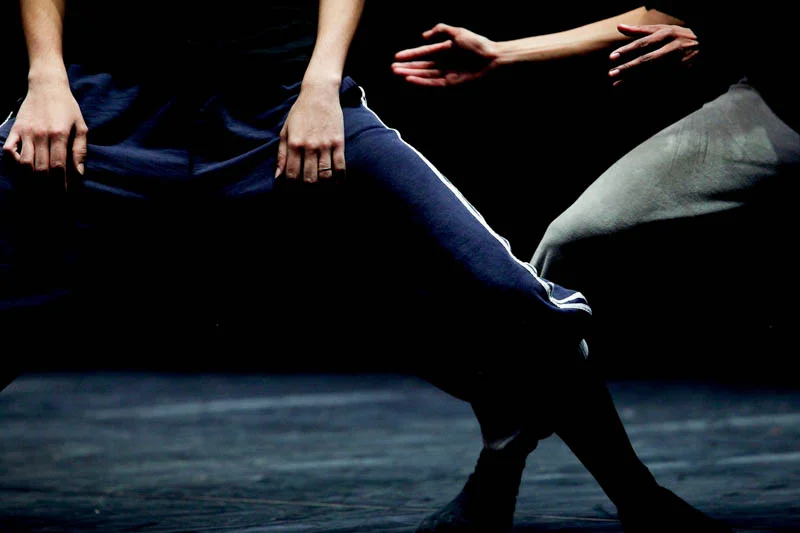
BACH (2026) 21’
When asked where did he learn to choreograph, Emanuel’s answer is alway the same - “by listening to Bach’s music”. As many others, Bach’s timeless genius has been a continuous object of study and source of inspiration for Gat’s own artistic journey.
Gat has choreographed his first work ever back in 1994, “Four Dances” to Bach’s second solo cello suite in D minor. He then went back to the work of the German master with "Preludes & Fugues" created for Le Ballet Du Grand Theatre De Genève in 2011 to the Well Tempered Clavier, and then created "GOLD" in 2013 for his own company to the Goldberg Variations.
BACH marks a return to Gat’s love and admiration to the music of J.S. Bach. The last movement from the second partita for solo violin in D minor BDW 1004, the famous Ciaccona, followed by the first movement from the third sonata, the adagio in C BWV 1005 as recorded in 1986 by Itzhak Perlman, are both a musical and artistic Everest to climb and at the same time, a home coming.
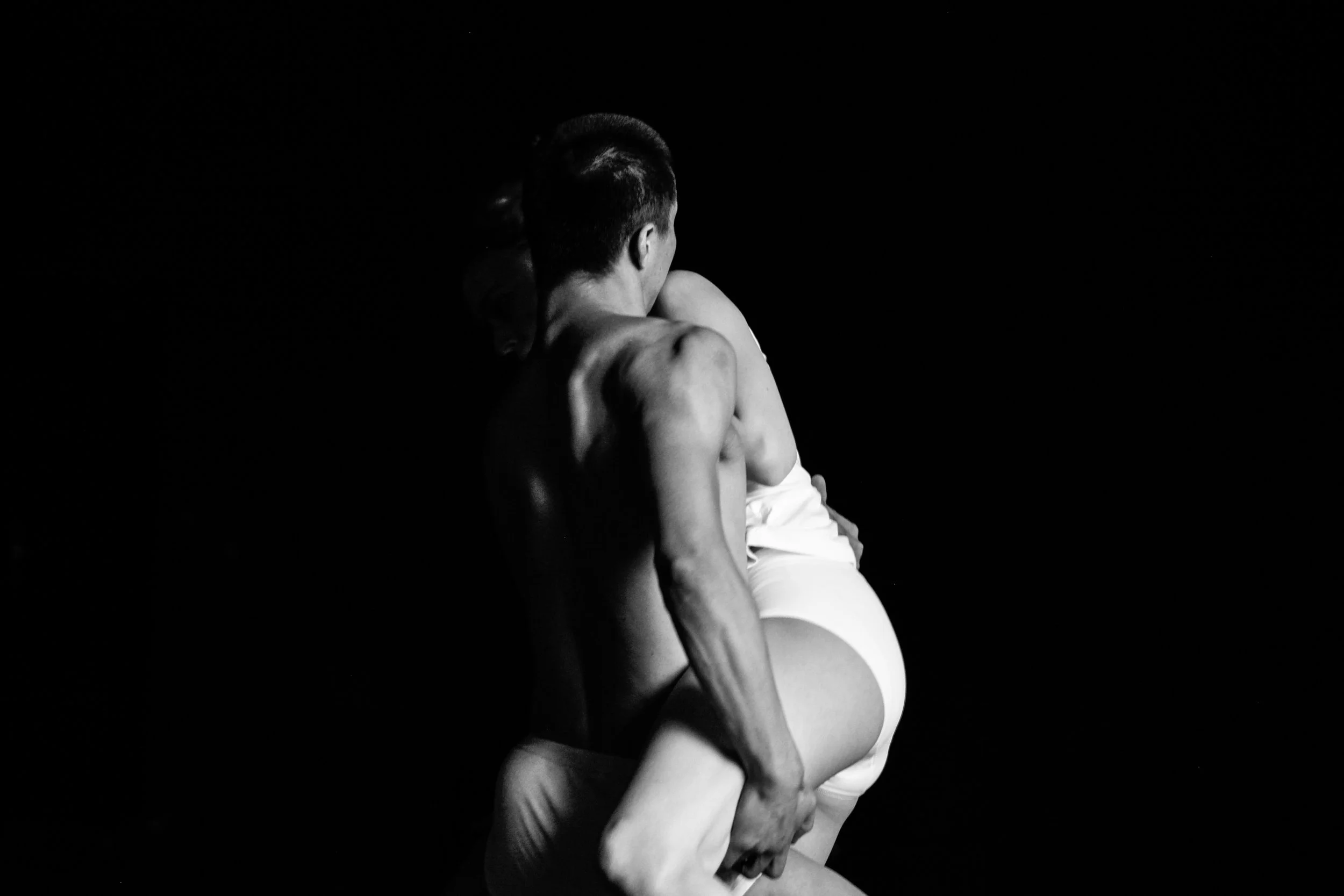
CREDITS
BACH (2026) 21’
Creation 2026
A work for two dancers.
Choreography, lights : Emanuel Gat
Music : J.S.Bach - Chaccone, Partita #2 in D minor BWV 1004, Adagio, Sonata #3 in C BWV 1005. Violin : Itzhak Perlman (1986)
Costumes : Thomas Bradley
Technical director : Guillaume Février / Sound designer : Frédéric Duru
Production : Emanuel Gat Dance.
Coproduction : Oriente Occidente - Rovereto, in progress...
With the support of the Conseil Départemental des Bouches-du-Rhône et de la Région Sud - Provence- Alpes-Côte d’Azur. Emanuel Gat Dance receives support from : le Ministère de la Culture et de la Communication - DRAC Provence-Alpes-Côte d’Azur.
SILENT BALLET (2008) 20’

World Premiere on July 1st, 2008 at Montpellier Danse Festival
Dance as a musical score.
An orchestration of movements, SILENT BALLET is using silence as well as its own live sounds, as a dense musical environment, open to endless opportunities for melodic, harmonic and rhythmic interpretations.
A self-contained dance, Silent Ballet experiments with different sets of choreographic tools and the transformation they undergo during the process of creation. Starting as parts of a growing physical mechanism, those initial sets of tools holds the DNA of a slow unfolding choreographic entity.
In many ways, Silent Ballet is dealing with choreography making itself. It exposes the parts of this fine tuned organism and allows a glimpse into the process of choreographic alchemy through human action. A multitude of questions being tackled within a bare landscape, in a dance piece striped to its basic elements.

CREDITS
SILENT BALLET (2008) 20’
recreation 2026
A work for seven dancers
Choreography, Lights & Costumes: Emanuel Gat
Production: Emanuel Gat Dance
Co-Production: Montpellier Danse Festival, Festival RomaEuropa, Sadlers Wells, Lincoln Center Festival, Maison des Arts de Créteil, Régie Culturelle Scènes et Cinés Ouest Provence
SACRE (2004) 33’
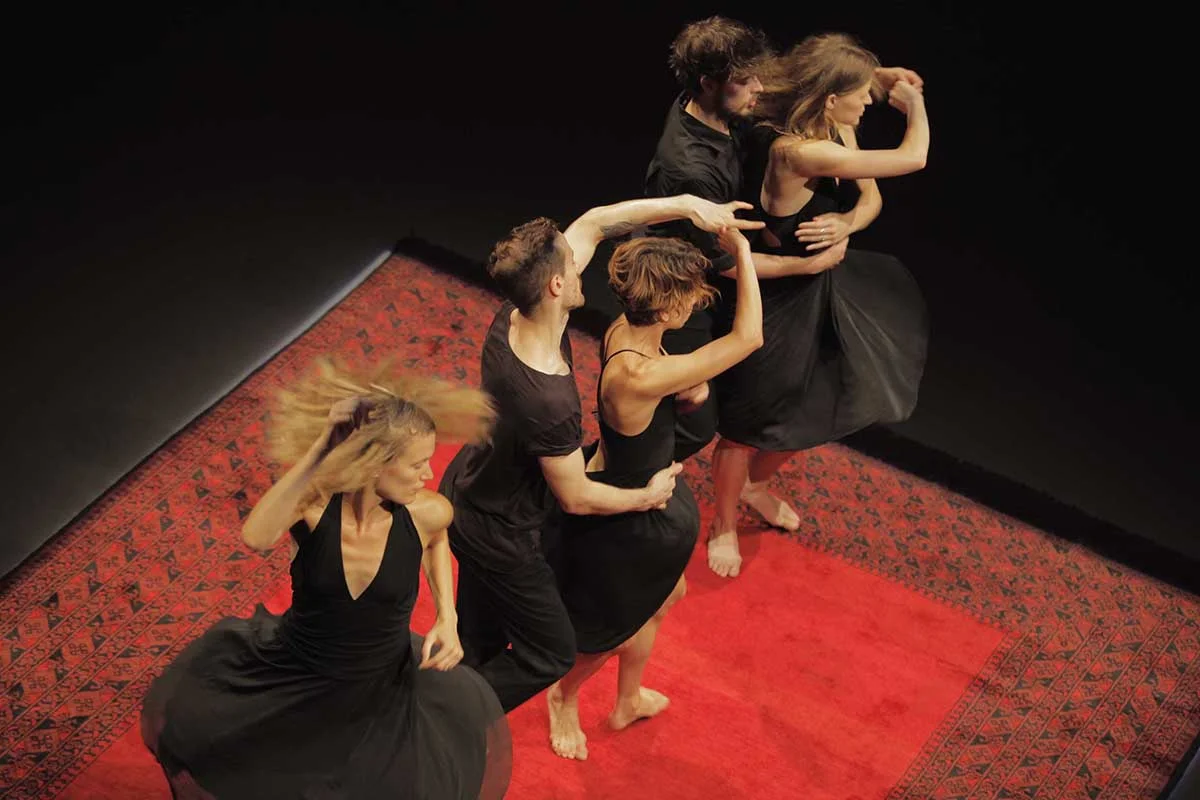
World premiere at Festival Uzès Danse 2004
Recreation 2026, world premiere at Oriente Occidente Festival - Rovereto 2026
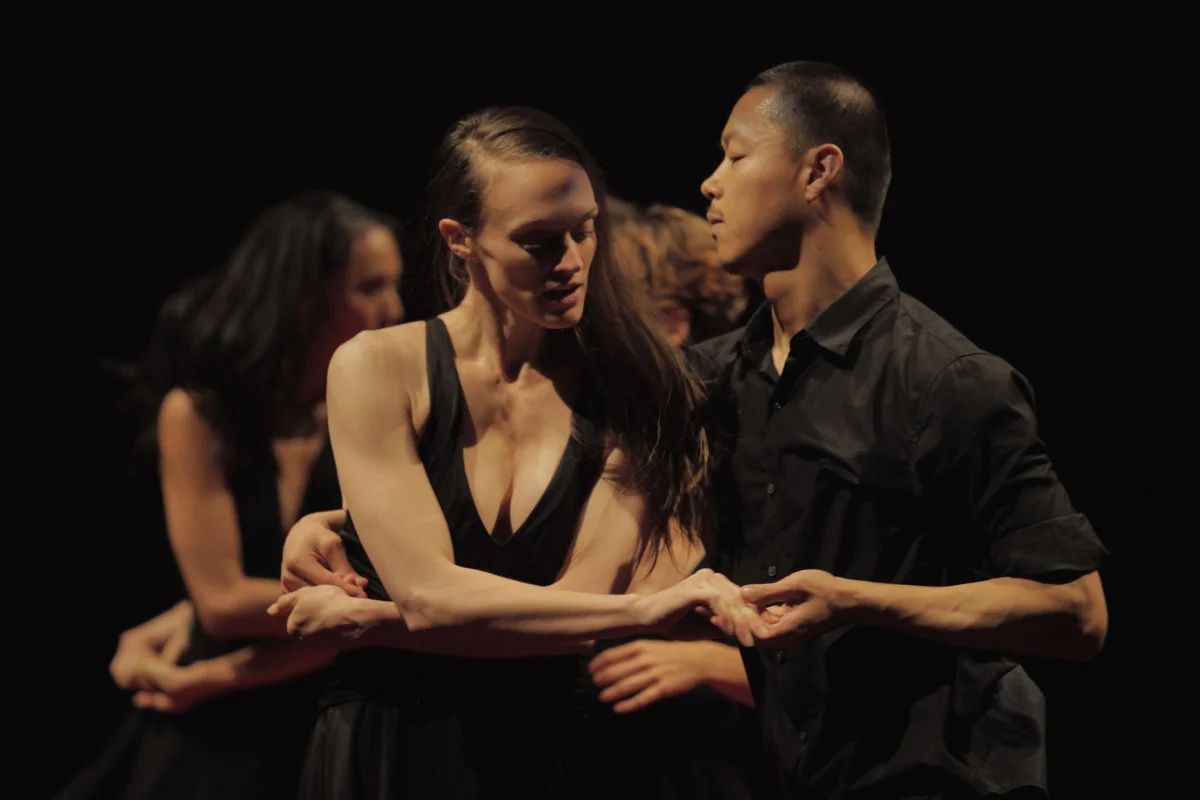
SACRE is a revisited version of the piece originally created by Emanuel Gat to Stravinsky's eponymous score back in 2004. A work for three women and two men, SACRE takes apart the mechanics of Cuban salsa dancing, and reassembles them to create a complex and dramaturgically charged choreographic score. A free spirited and challenging reading of Stravinsky's masterpiece, SACRE offers no notions of sacrifice, but rather a multitude of options for action.
SACRE was awarded a Bessy award for its performances at the Lincoln Center festival 2006, New York.
“SACRE by choreographer Emanuel Gat, is more distinctive. It’s a kind of stunt, hearing in the ritual sacrifice of Stravinsky’s score the ritual of a crowded dance floor in which three women and two men engage in the Möbiusstrip partnering of salsa and swing dancing. This reading of the score (...) is persuasive — as it was when Mr. Gat’s company first brought the work to New York in 2006."
Brian Seibert, New York times, June 17, 2015

"Did you know that you could dance salsa on Stravinsky? Proof of this is the scintillating performance of the choreographer Emanuel Gat. His interpretation of the "Rite of Spring" is as iconoclastic as it is exciting. The Israeli artist has captured the lustful liveliness of salsa, which slips effortlessly into the percussive flow of the music. As for the ascent of sex, it explodes with a fatalist peak which is at the heart of the spiral of love. At full speed, couples form, swaying together and then breaking off. They change partners without the movement stopping, forming an uninterrupted chain of salsa, blending in so swiftly that the individual dancers can no longer be identified. Amid this whirlwind, the impetus provided by Stravinsky's music is easy to discern. In this modern game of hunting, everything is beautiful and dangerous. The suspense is intense: men select a partner in turns, creating a crescendo of anxiety until the final choice is made."
Rosita Boisseau, Le Monde
Articles Presse


CREDITS
SACRE (2004) 33’
Recreation 2026
A work for five dancers.
Music : Igor Stravinsky, The Rite Of Spring
London Symphony Orchestra conducted by Leonard Bernstein (1972)
Choreography, lights and costumes : Emanuel Gat
Original production : Emanuel Gat Dance
Co-Production : The Suzanne Dellal Centre, Festival Uzès Danse, Monaco Dance Forum.
With the support of : The Dellal Foundation, Theatre de l’Olivier - Istres, Les Ballets de Monte-Carlo.
Production recreation 2015 : Emanuel Gat Dance
In residency at Montpellier Danse, Agora - Cité Internationale pour la Danse and at Maison de la danse intercommunale Istres. With the support of Fondation BNP Paribas.
Production recreation 2026 : Emanuel Gat Dance
Coproduction : Festival Oriente Occidente - Rovereto, in progress...
Emanuel Gat Dance is supported by the Ministère de la Culture et de la Communication DRAC Provence Alpes Côte d’Azur.
“Finding dancers is very intuitive, it’s a yes or no. I see someone and something happens to me, I want to work with them or not." In every creative process, there comes a point where deadlines creep up, time runs short and decisions must be made. At that point, the proverbial hair spray comes out, affixing the sequences and happenings that constitute a dance work. No matter how free or improvised the time in the studio had been, most dances are eventually set. Chance occurrence and experimentation take a back seat to further the comfort and knowledge of the performing team.